
Adult Airway & Invisalign in Mysore: How Expanding Crowded Arches Improves Breathing & Sleep Quality
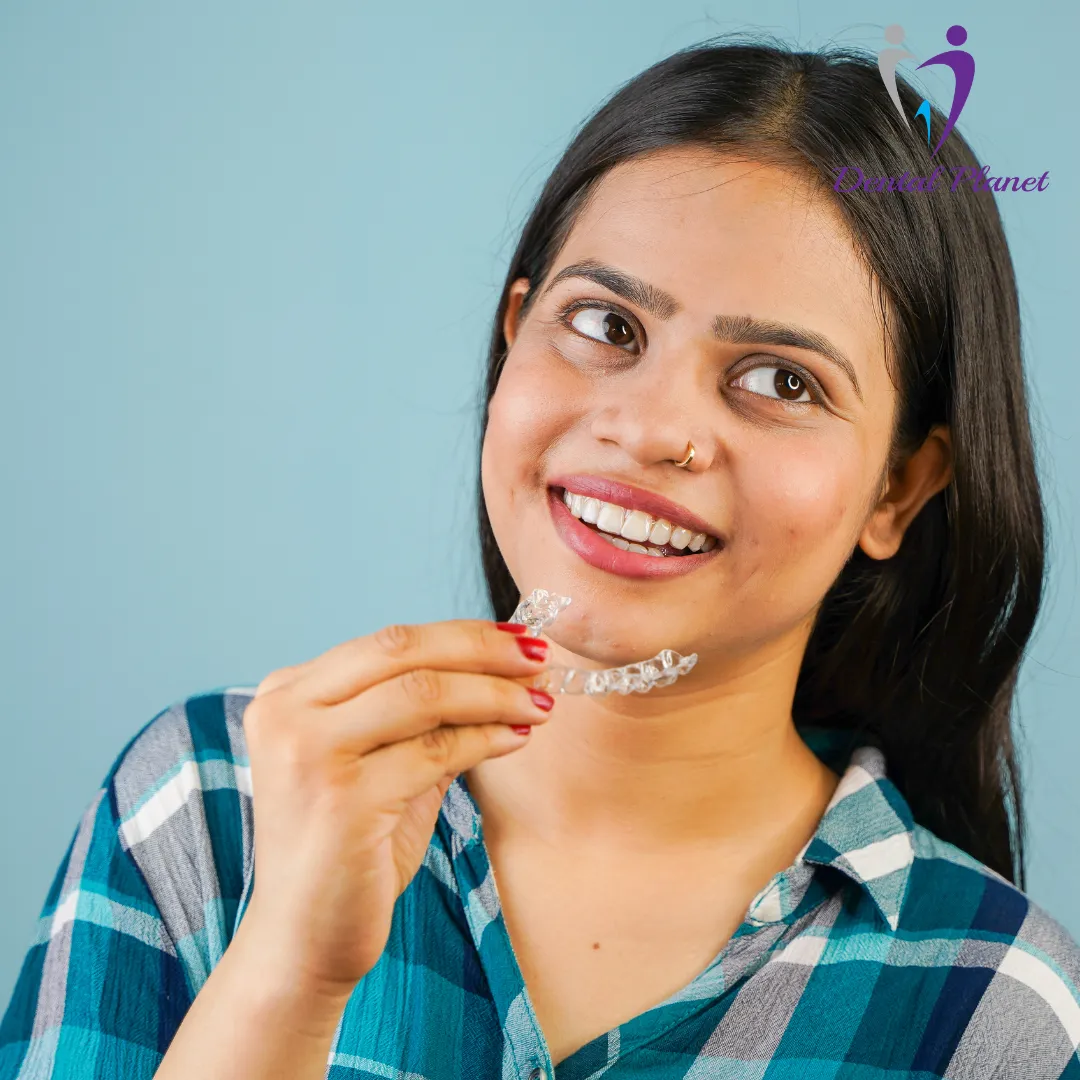
— Dr. Bhagyalakshmi Avinash, PhD, Senior Orthodontist & Invisalign Specialist at Dental Planet Mysore.
The Hidden Biological Link: Crowded Teeth and Sleep-Disordered Breathing
Do you wake up feeling exhausted despite getting eight hours of sleep? Do you experience chronic morning dry mouth, frequent headaches, brain fog, or persistent nighttime teeth grinding (bruxism)? If so, your dental arches may be directly impacting your upper airway volume.
In modern airway-focused orthodontics, teeth are no longer viewed in isolation. The upper jaw (maxilla) forms both the dental arch and the anatomical floor of the nasal cavity. When an adult presents with severe lower or upper crowding, narrow dental arches, or a constricted high-vaulted palate, the oral cavity becomes structurally too small for the tongue.
During deep REM sleep, human muscles naturally relax. If the dental arch is constricted, the tongue cannot rest comfortably against the roof of the palate (the ideal physiological posture). Instead, gravity pulls the base of the tongue backward into the oropharynx, narrowing the airway passage, causing turbulent airflow (snoring), and precipitating episodes of Obstructive Sleep Apnea (OSA) or Upper Airway Resistance Syndrome (UARS).
Why Extracting Premolars in Adults Often Harms Airway Volume
For decades, conventional orthodontic practice in India relied heavily on extracting four premolar teeth to "create room" for crowded teeth. While extraction orthodontics straightens teeth on a 2D photograph, it frequently retracts the anterior teeth backward, flattening the dental arch and significantly reducing the functional oral volume (the "tongue box").
At Dental Planet Mysore, Dr. Bhagyalakshmi Avinash adopts a strict non-extraction, airway-centric orthodontic philosophy. By utilizing modern Invisalign clear aligners, we expand the collapsed arch outwards along its natural biological arch perimeter. This anatomical approach delivers three profound benefits:
- Broad, Youthful Aesthetic Smile: Eliminates dark buccal corridors (black shadows at the corners of your smile) and restores natural lip fullness.
- Expanded Oral Tongue Space: Gives the tongue a broad, supportive platform against the palate, naturally preventing backward tongue collapse during sleep.
- Increased Nasal Volume: Relieves internal structural tension and supports optimal nasal breathing instead of mouth breathing.
Invisalign Arch Expansion vs Traditional Metal Braces
| Clinical Feature | Airway-Focused Invisalign | Traditional Fixed Braces |
|---|---|---|
| Arch Expansion Control | Digital 3D ClinCheck controls exact buccal crown and root torque (0.2 mm per aligner). | Relies on continuous archwires; harder to isolate individual molar root expansion without tipping. |
| Need for Tooth Extractions | Minimizes or eliminates premolar extractions by expanding arch circumference. | Frequently relied on 4 premolar extractions, shrinking internal tongue volume. |
| Nighttime Airway Comfort | Smooth, customized SmartTrack aligners prevent tongue laceration and act as a gentle bite splint. | Sharp brackets and wires can aggravate oral tissues and restrict tongue movement. |
| Periodontal Bone Safety | Strictly calculated to keep tooth roots within the cortical bone envelope (preventing gum recession). | Uncontrolled heavy reciprocal forces can cause root resorption or bone dehiscence. |
Why Teeth Grinding (Bruxism) Is Often an Airway Survival Mechanism
Many patients visit Dr. Avinash B.S. (Senior Periodontist & Implantologist) complaining of cracked molars, abfraction lesions along the gumline, and severe gum recession caused by nocturnal teeth grinding. While traditionally attributed to "emotional stress", modern sleep medicine reveals a fascinating physiological truth:
The Airway-Bruxism Reflex Cycle:
When your pharyngeal airway collapses during sleep, your blood oxygen saturation drops (hypoxia). Your brain experiences a survival panic surge of adrenaline and sympathetic nervous activity. To clear the obstructed breathing passage, the brain triggers a forceful contraction of the masseter muscles, jutting the lower jaw forward. This jaw thrust re-opens the throat, allowing you to breathe—at the expense of grinding your teeth together with up to 250 pounds of nocturnal force!
By correcting your crowded bite and expanding constricted arches with Invisalign, we address the root anatomical trigger rather than merely masking symptoms with a temporary nightguard.
Watch: Dr. Bhagyalakshmi Explains Airway & Orthodontic Harmony
Step-by-Step Airway & Smile Assessment at Dental Planet Mysore
- High-Resolution 3D iTero Digital Optical Scan: In under 60 seconds, our radiation-free intraoral scanner captures 6,000 optical frames per second, calculating your exact transverse arch width and palate shape.
- Outcome Simulator & Airway Evaluation: Dr. Bhagyalakshmi evaluates your buccal corridors, tongue resting position, and occlusal interference points chairside.
- Custom ClinCheck 3D Treatment Engineering: Precise digital planning ensures your teeth are uprighted within healthy alveolar bone boundaries, expanding your arch perimeter safely without invasive surgery.
- Doctor-Monitored Progression: Clear aligners are changed every 7 to 10 days, gently widening your smile, transforming your facial profile, and unlocking effortless nasal breathing.
Frequently Asked Questions (FAQ)
Q1. Can Invisalign really improve breathing and sleep apnea in adults?
Yes. When adult teeth are crowded, the dental arch is frequently constricted or V-shaped. This narrows the roof of the mouth and robs the tongue of resting room. By utilizing non-extraction Invisalign arch development, Dr. Bhagyalakshmi Avinash expands the dental arch to its natural physiological perimeter, creating ample room for the tongue to rest against the palate rather than falling backward into the pharyngeal airway during sleep.
Q2. Why do teeth grinders (bruxism) often have airway obstructions?
Sleep science demonstrates that nocturnal clenching and grinding are frequently the brain's instinctive reflex to open a collapsed airway. Thrusting the lower jaw forward during a grinding episode tensions the pharyngeal muscles, preventing suffocation. Treating airway constriction through orthodontic arch expansion and alignment stabilizes the bite and reduces airway-induced bruxism.
Q3. How does narrow palate expansion differ between children and adults?
In growing children, the mid-palatal suture is open, allowing rapid skeletal expansion with expanders or Myobrace. In adults, the skeletal suture has fused; however, Invisalign achieves gentle, highly controlled dentoalveolar expansion (uprighting lingually tipped molars and premolars by 2 to 4 mm), significantly enlarging functional tongue volume and oral cavity airspace without invasive surgery.
Q4. Will Invisalign replace my CPAP machine?
Invisalign is an orthodontic biomechanical treatment that optimizes oral volume, nasal floor posture, and occlusal harmony. For patients with mild-to-moderate Obstructive Sleep Apnea (OSA) or upper airway resistance syndrome (UARS), it can significantly relieve airway restriction. For severe OSA, it is utilized as part of an interdisciplinary airway protocol alongside medical sleep physicians or custom Mandibular Advancement Devices (MAD).
Q5. What is the October VIP Invisalign Pass offer at Dental Planet Mysore?
During October 2026, Dental Planet Mysore provides an exclusive VIP Smile & Airway Assessment pass comprising a complimentary 3D iTero optical scan and Outcome Simulation (valued at ₹3,500) plus a ₹10,000 Invisalign treatment credit, strictly limited to 12 consultation slots.